


What Makes Handmade Chocolate More Premium?
Have you ever wondered why a single piece of artisanal chocolate feels like a complete experience, while a standard grocery store bar is just a quick sugar fix? It isn’t just about the price tag; it’s about the soul of the confection.
At Dallmann Confections, we believe that chocolate is a living art form. When we talk about "premium" chocolate, we aren't just using a marketing buzzword. We are referring to a rigorous standard of craftsmanship that has been passed down through three generations, from our roots in St. Gilgen, Austria, to our kitchen in San Diego.
In this guide, we’ll break down exactly what happens behind the scenes of a handmade chocolate kitchen and why those details make every bite significantly more luxurious than anything produced on a factory line.
Is it all about the ingredients?
The foundation of any premium chocolate is the quality and purity of its raw materials. While industrial manufacturers focus on cost-efficiency, handmade chocolate focuses on flavor integrity.
-
100% Pure Cocoa Butter: Mass-market brands often strip away the cocoa butter—the most expensive part of the bean—to sell it to the cosmetic industry. They replace it with cheap vegetable oils or palm oil. At Dallmann, we keep the natural fats in. Because cocoa butter melts just below human body temperature, our chocolate provides that instant, silky "melt-in-your-mouth" sensation that oil-based chocolates can’t replicate.
-
Fine Flavor Cacao: We don't just use "cocoa." we use specific varieties like Arriba Nacional from Ecuador. Like a fine wine, these beans have "terroir"—a sense of place. You might taste notes of blackberry, citrus, or even floral aromas that occur naturally in the bean.
-
Real Inclusions: If you taste lavender or Earl Grey in a Dallmann truffle, it’s because we steeped real botanicals in fresh cream. We never use artificial flavorings or preservatives to "mimic" a taste.
Why does small-batch production matter?
Industrial chocolate is designed for one thing: consistency. To ensure a bar tastes the same in London as it does in Los Angeles, factories often over-roast their beans to mask natural variations. This kills the unique character of the cacao.
Handmade, small-batch production does the opposite. By working in small quantities, our chocolatiers can:
-
Adjust Roasting in Real-Time: We can tweak roasting times to the second to highlight the specific notes of a particular harvest.
-
Maintain Temperature Control: Chocolate is notoriously temperamental. Small batches allow us to monitor the tempering process—the heating and cooling of chocolate—to ensure a perfect "snap" and a mirror-like shine.
-
Prioritize Freshness: Because we don't store products in massive warehouses for months, you are tasting the ingredients at their absolute peak of flavor.
How does human artistry change the experience?
A machine can pour chocolate into a mold, but it cannot create a masterpiece. At Dallmann Confections, every bonbon is treated like a tiny canvas.
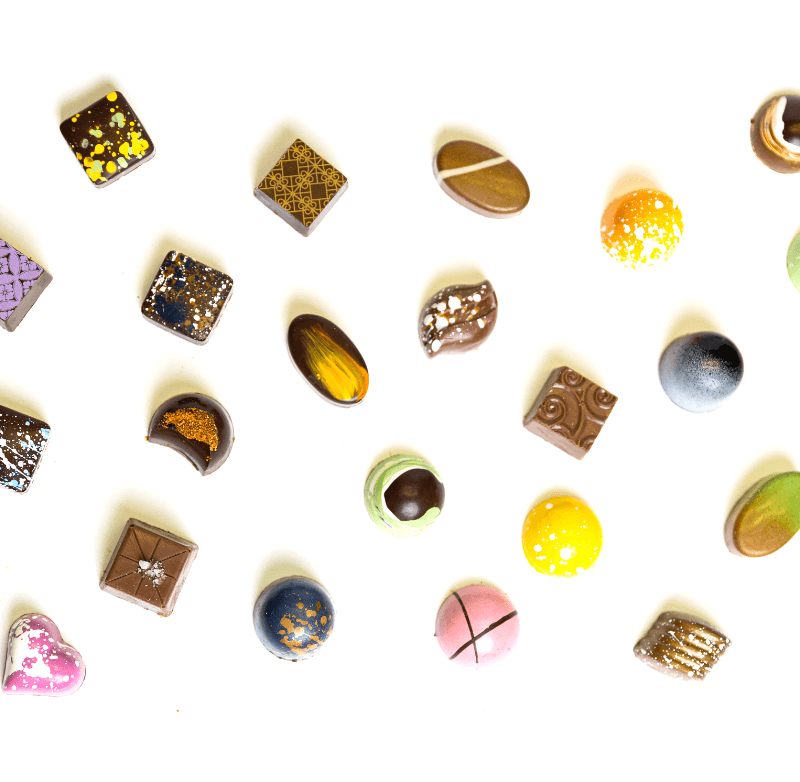
Before the chocolate even touches the mold, our artisans hand-paint or airbrush intricate designs using colored cocoa butter. This level of individual attention means that no two pieces are exactly alike. When you open a box of our Signature Collection, you aren't just looking at candy; you’re looking at handcrafted jewels.
A machine also cannot decide to experiment with bold, multi-dimensional pairings. Human creativity allows us to develop flavors like:
-
Coconut Curry: A tropical, spicy journey.
-
Bacon & Applewood Smoked Salt: The perfect balance of savory and sweet.
-
Cardamom & Orange: A nod to our Old World Austrian heritage.
Does the "Snap" really indicate quality?
Yes! That crisp sound you hear when you break a piece of dark chocolate is the sound of professional tempering. Proper tempering aligns the fat crystals in the cocoa butter. If a chocolate is soft, crumbly, or has white streaks (called bloom), it was likely mass-produced without the precise temperature curves that a master chocolatier provides. A premium "snap" is a hallmark of a stable, high-quality product that will have a smooth texture on the tongue.
Is handmade chocolate more ethical?
For many, the "premium" label also extends to the ethics of the supply chain. Mass-market chocolate often relies on bulk cocoa with limited traceability. Artisanal makers like Dallmann Confections prioritize direct and transparent sourcing. By working with specific estates and farmers, we ensure that the people growing our cacao are paid fairly and use sustainable agricultural practices. When you choose handmade chocolates, you are supporting a shorter, more responsible supply chain.
How should you store premium chocolate?
Because handmade chocolate lacks the heavy preservatives and stabilizers found in grocery store bars, it requires a little more care.
-
Avoid the Fridge: Refrigerator moisture can cause sugar bloom (a grainy texture).
-
Cool and Dry: Store your chocolates in a cool, dry place between 65-68°F.
-
Away from Odors: Chocolate absorbs surrounding smells, so keep it away from your spice rack!
Why is it the perfect gift for someone who has everything?
When someone "has everything," they usually value experiences over "stuff." A box of mass-produced chocolates is a commodity. A box of Dallmann handcrafted truffles is an ephemeral luxury. It shows that you value the recipient enough to seek out something exclusive and intentional.
Through our "Build a Box" feature, you can even customize the selection to match their personality—whether they are a dark chocolate traditionalist or an adventurous eater looking for exotic spices.
Conclusion: The Dallmann Difference
Handmade chocolate is more premium because it refuses to compromise. It rejects the shortcuts of industrial manufacturing in favor of the "Dallmann Method"—a combination of 1954 Austrian heritage, 100% natural ingredients, and the creative spirit of San Diego. From the shine of the hand-painted shells to the complex finish of the single-origin cacao, the difference is something you can taste, see, and feel.
Ready to experience the pinnacle of chocolate craftsmanship?
Shop Dallmann Confections Today and treat yourself or a loved one to a sensory journey that mass-produced bars simply cannot provide.
Frequently Asked Questions
What is the difference between "artisan" and "mass-produced" chocolate?
Artisan chocolate is made in small batches with high-quality ingredients like 100% cocoa butter and no preservatives. Mass-produced chocolate is made in large factories, often replacing cocoa butter with vegetable oils and using artificial flavors to ensure a long shelf life and consistent (though blander) taste.
Why is handmade chocolate more expensive?
The price reflects the higher cost of premium, ethically sourced cacao beans and the labor-intensive process of hand-crafting each piece. Unlike machines, human chocolatiers provide individual inspection and artistic detailing that takes significantly more time and expertise.
Does handmade chocolate last as long as store-bought bars?
No, and that’s a good thing! Because handmade chocolate uses fresh cream and lacks artificial preservatives, it is meant to be enjoyed within a few weeks of purchase for the best flavor experience.
What should I look for to tell if chocolate is high quality?
Look for a glossy finish (not dull or grey), a clean snap when broken, and a list of ingredients that starts with cocoa mass or cocoa butter rather than sugar or vegetable oil.